
A1 Level – Elementary
1. Do you have a goal for this year?
2. Is your goal easy or difficult?
3. Do you want to learn a new skill?
4. What is one goal for your health?
5. Do you write down your goals?
6. Is it important to finish a goal?
7. Do you like making plans?
8. What is a goal for your job or school?
9. Do you need help to reach your goal?
10. What is one small goal you achieved?
11. Do you think about the future often?
12. Do you have a goal for next month?
13. Is it good to set many goals?
14. What makes you feel motivated?
15. Do you celebrate when you succeed?
A2 Level – Pre-Intermediate
1. What kind of new skill would you like to learn this year and why?
2. How can a person plan and organize their time to achieve a big goal?
3. What are two main reasons why people give up on their yearly goals?
4. How can your friends or family help you stay focused on your goals?
5. What is the difference between a short-term goal and a long-term goal?
6. Do you think it is better to set specific goals or general goals?
7. How do you measure your progress when working towards a goal?
8. What is a simple strategy for overcoming challenges when a goal is difficult?
9. What tools (like apps or notebooks) do you use for tracking your goals?
10. If you fail a goal, what should you do next?
11. What is a goal you have for your personal development this year?
12. How do seasonal changes affect your motivation to work on goals?
13. What advice would you give a friend who is struggling to start a goal?
14. Do you believe in making New Year’s resolutions? Why or why not?
15. What are the benefits of having goals for your financial life?
B1 Level – Intermediate
1. Discuss the psychological effect of writing goals down versus just thinking about them.
2. How does the economy or job market in your country affect people’s professional goals?
3. What is the concept of ‘SMART’ goals, and do you think it is effective?
4. Analyze the difference between internal motivation and external motivation for goal setting.
5. How can you maintain momentum on a goal when the initial excitement wears off?
6. What are the ethical implications of setting goals that might affect other people’s lives?
7. Discuss the phenomenon of ‘burnout’ and how it relates to overly ambitious yearly goals.
8. How do cultural values in your society influence the types of goals people prioritize?
9. What challenges do people face when their personal goals conflict with their family obligations?
10. Describe a time when achieving a goal did not feel as satisfying as you expected.
11. How does the concept of ‘delayed gratification’ apply to achieving long-term yearly goals?
12. What steps should a person take to adjust their goals if circumstances suddenly change?
13. Discuss the importance of celebrating small milestones within a large yearly goal.
14. How does social media influence what people perceive as a valuable or worthy goal?
15. What is your personal philosophy on failure in the context of goal achievement?
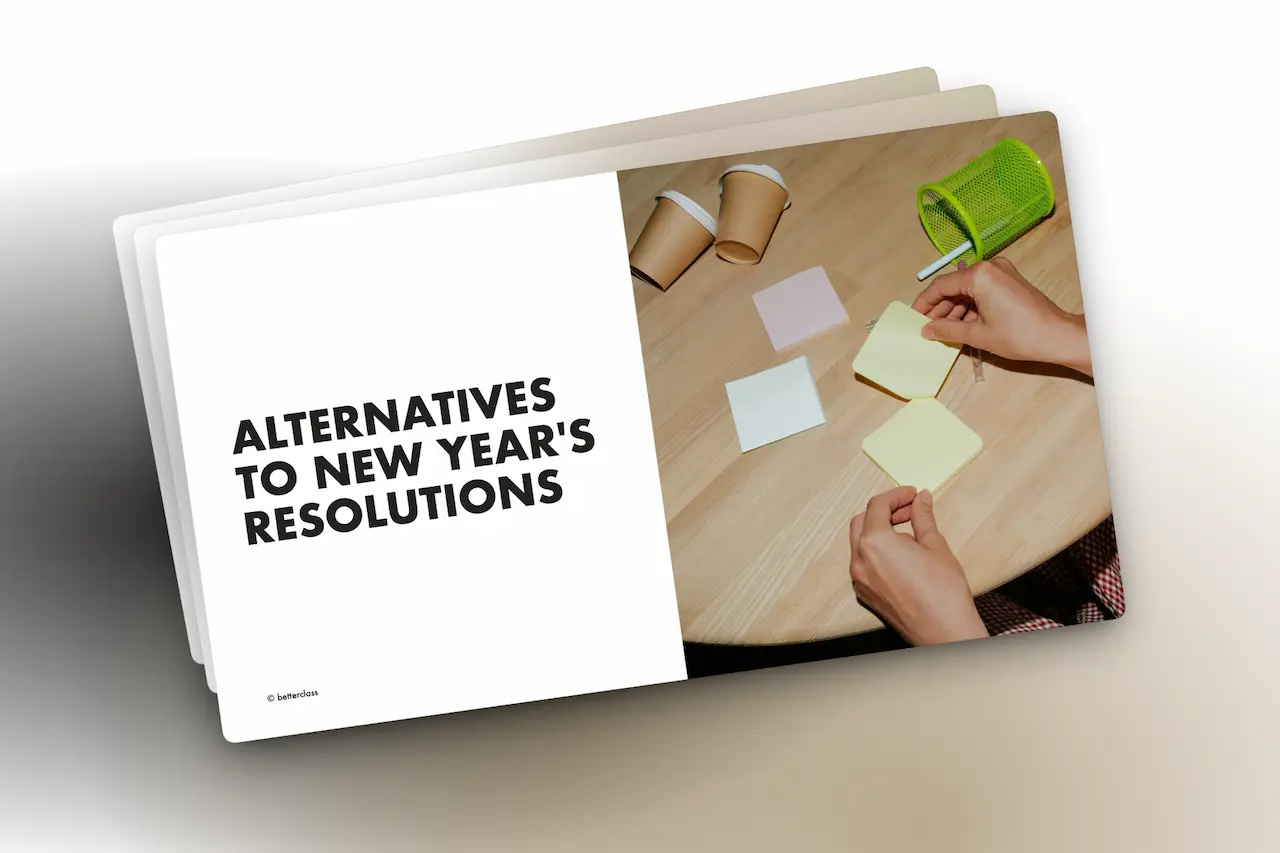
Check out this ESL lesson plan for B2 students – “Alternatives to New Year’s Resolutions”
B2 Level – Upper-Intermediate
1. Analyze the societal pressure to continually pursue self-improvement and its psychological toll.
2. Discuss the ethical considerations when a professional goal requires intense, potentially unhealthy sacrifice.
3. To what extent do economic inequality and privilege influence an individual’s ability to pursue their goals?
4. Evaluate the efficacy of various tracking methods (e.g., visual charts vs. journaling) for complex goals.
5. How does the corporate environment leverage yearly goal setting to maximize employee output?
6. What are the key psychological theories behind motivation, and which do you find most applicable to achieving goals?
7. Discuss the phenomenon of ‘perfectionism’ and how it can either help or hinder goal completion.
8. What are the legal or contractual implications of failing to meet performance goals in a workplace?
9. How does technology (AI, automation) create new possibilities and challenges for career-related yearly goals?
10. Analyze the media’s role in promoting certain types of ‘aspirational’ lifestyles as universal goals.
11. What formal methodology should be used when setting goals for a large, diverse team or group?
12. Discuss the concept of ‘identity-based goals’ versus ‘outcome-based goals’ and which is more effective.
13. How does the political climate or global events necessitate a re-evaluation of long-term goals?
14. Evaluate the potential negative effects of excessive comparison with others’ goal achievements online.
15. What steps can be taken at a systemic level to foster a culture of realistic, sustainable goal setting?
C1 Level – Advanced
1. Critically evaluate the moral duty of employers to support the personal development goals of their staff.
2. Analyze the philosophical debate regarding free will versus determinism in the context of achieving personal destiny through goals.
3. Discuss the long-term societal effects of a pervasive culture that demands constant productivity and goal attainment.
4. How might high-level economic policies be restructured to encourage goals related to social contribution rather than pure profit?
5. Explore the tension between personal autonomy in goal setting and the demands of collective societal welfare.
6. What is the ethical complexity of promoting goals in developing nations that mirror Western ideals of success and achievement?
7. Discuss the systemic reforms needed within educational institutions to better prepare students for setting meaningful, lifelong goals.
8. Analyze the philosophical concept of ‘The Good Life’ and how yearly goal setting either contributes to or detracts from it.
9. Evaluate the fairness of meritocratic systems that heavily penalize those who fail to meet ambitious personal and professional goals.
10. What is the role of governmental policy in creating the necessary infrastructure to support goals related to health and longevity?
11. Discuss the moral complexities of goals that involve significant risk or potential harm to achieve a breakthrough achievement.
12. How does the language used to describe goals (e.g., ‘crush,’ ‘dominate’) reflect broader cultural values of competition?
13. What ethical framework should be applied when setting goals related to genetic engineering or human enhancement?
14. Analyze the concept of ‘existential goals’—those that focus on meaning and purpose rather than quantifiable achievement.
15. How do shifts in geopolitical power necessitate a reassessment of national and transnational strategic goals?
C2 Level – Proficiency
1. Does the pervasive institutionalization of goal setting fundamentally compromise the individual’s capacity for spontaneous self-discovery?
2. Debate the philosophical validity of the assertion that human existence is primarily defined by the pursuit and attainment of external goals.
3. Construct a detailed systemic blueprint for a post-scarcity society where the traditional concept of ‘professional goals’ becomes obsolete.
4. Evaluate the moral responsibility of humanity to set species-level goals concerning long-term survival and cosmic exploration.
5. Analyze the ultimate difference between manufactured ambition driven by consumerism and authentic, internally generated purpose.
6. How can advanced policy models ensure that goal-setting systems do not reinforce existing structures of social or economic inequality?
7. Synthesize a theoretical framework that integrates Eastern philosophies of acceptance and presence with Western models of proactive goal achievement.
8. Critique the fundamental notion that measurable progress is the sole valid metric for a successful, meaningful life.
9. Formulate a comprehensive, systemic strategy for the elimination of ‘goal-related stress’ as a public health issue.
10. Discuss whether the hyper-focus on personal goals detracts from the necessary collective action required to solve global crises.
11. Analyze the long-term sociological consequences of normalizing the constant external validation of personal achievements via digital platforms.
12. Debate the ethical and practical feasibility of setting mandatory, globally coordinated goals for environmental sustainability.
13. What fundamental paradigm shifts are required to redefine success based on contribution and well-being rather than material acquisition?
14. How do philosophical concepts of temporal linearity influence the human tendency to structure life around yearly milestones?
15. Critically assess the long-term viability of current professional goal-setting models in a world facing profound technological disruption?