A1 Level – Elementary
1. What colors do you like the most?
2. Do you like playing with water balloons?
3. Is Holi celebrated in your country?
4. What do you wear on a day of celebration?
5. What is the most famous part of Holi?
6. Do you like sweet foods?
7. What do you do with your friends to celebrate?
8. What is the spring season like where you live?
9. Do you enjoy singing and dancing?
10. What does the color red mean to you?
11. Is Holi a quiet or loud festival?
12. What language do people speak during Holi?
13. Do you like flowers?
14. What time of day do Holi celebrations start?
15. What makes you happy?
A2 Level – Pre-Intermediate
1. What is the mythological story behind the celebration of Holi?
2. Why are specific colors like red, yellow, and blue used during the festival?
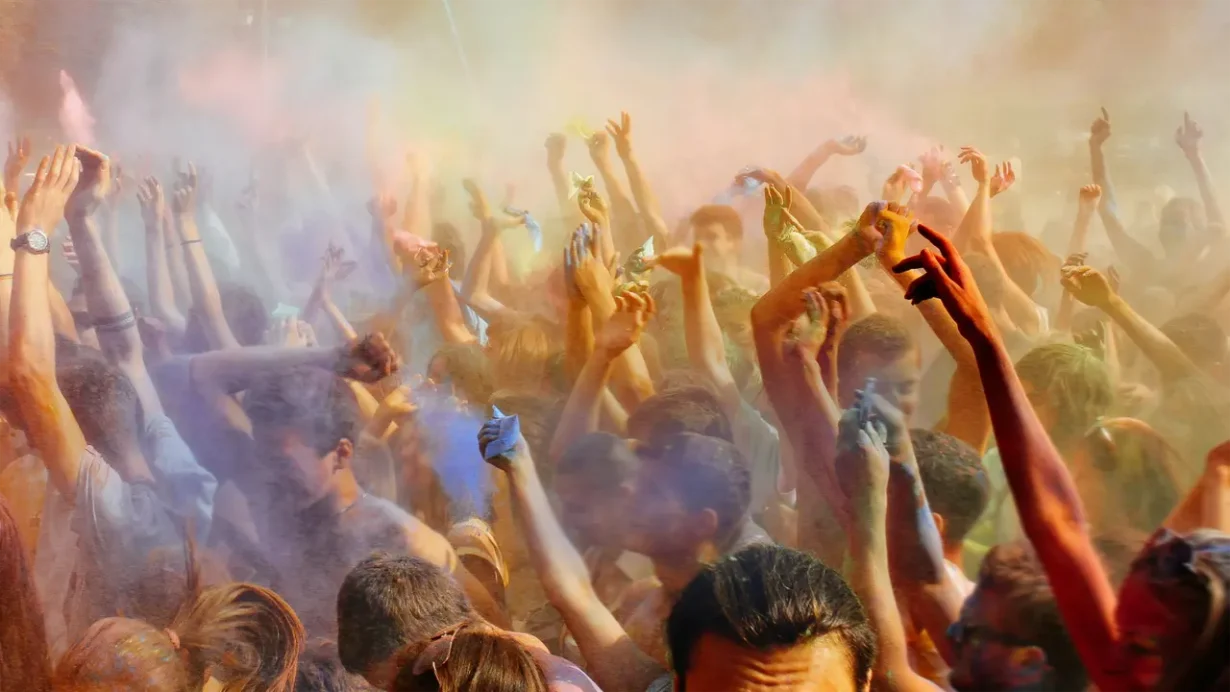
3. Describe the atmosphere of a street during a Holi celebration.
4. What types of traditional sweets and snacks are prepared for Holi?
5. How does Holi mark the transition from winter to spring?
6. What is the meaning of the bonfires lit during the Holika Dahan ritual?
7. Is Holi celebrated over one day or multiple days?
8. How do people protect their hair and skin from the dry colors?
9. What role does music play in the festival’s overall energy?
10. How does the celebration of Holi differ in rural areas versus large cities?
11. What social barriers (e.g., class, age) are temporarily broken during Holi?
12. Have you ever wished someone a “Happy Holi”?
13. What precautions should be taken to ensure the colors used are safe?
14. Why is Holi often called the Festival of Colors?
15. What are the first few things people do when the color play is over?
B1 Level – Intermediate
1. Discuss the philosophical significance of the victory of good over evil celebrated during Holi.
2. How does the act of applying color to someone bridge or ease social tensions?
3. What are the key differences between the traditional use of natural colors and modern synthetic powders?
4. Describe the specific traditions of Lathmar Holi celebrated in regions like Barsana and Nandgaon.
5. How does the preparation of special Holi drinks, like Thandai, contribute to the festive spirit?
6. What is the environmental impact of large-scale Holi celebrations (water, waste)?
7. To what extent has Holi been influenced by modern popular culture and cinema?
8. How do communities ensure that the spirit of joy and fun is maintained without causing harm?
9. Discuss the importance of wearing white clothing during the celebration.
10. What are the various regional names and slightly different customs associated with the festival?
11. How do people manage their energy and excitement throughout the day-long event?
12. What role does family gathering and feasting play after the color play has ended?
13. Debate whether the festival should remain a public, outdoor event or be contained in private spaces.
14. What does the smearing of Gulal (colored powder) symbolize in Hindu tradition?
15. How do non-Hindus participate in and perceive the celebration of Holi?
B2 Level – Upper-Intermediate
1. Analyze the social function of Holi as a mechanism for reinforcing or redefining community structure.
2. Evaluate the economic impact of Holi, from the sale of colors and sweets to tourism.
3. Discuss the challenges of maintaining gender safety and respect during the highly chaotic color play.
4. To what degree does the use of colors in Holi symbolize diversity and unity?
5. How has the diaspora of Indian people influenced the celebration of Holi in Western countries?
6. Debate the claim: “The modern commercialization of Holi has diluted its original religious and social meaning.”
7. What are the subtle differences in mythological narratives (e.g., Krishna-Radha) that influence regional customs?
8. Examine the historical significance of the festival as a time for clearing debts and renewing relationships.
9. How does the anticipation leading up to Holi contribute to a collective state of excitement?
10. Discuss the ethical considerations of using industrial or toxic dyes as color substitutes.
11. What psychological freedom does the temporary suspension of formality and social rules provide?
12. How should public health concerns (e.g., cleanliness, water usage) be balanced with traditional practices?
13. Analyze the visual impact of Holi photography and its role in popularizing the festival globally.
14. What literary and poetic traditions are associated with the seasonal and romantic themes of Holi?
15. In what ways does the concept of ‘play’ or ‘mischief’ inform the central actions of the festival?
C1 Level – Advanced
1. Analyze the political and social commentary that can be expressed through public Holi celebrations.
2. To what degree is Holi a reflection of ancient Hindu cosmological views on creation and destruction?
3. Discuss the philosophical meaning of the temporary inversion of social order during the festival.
4. Evaluate the efficacy of modern campaigns promoting eco-friendly, herbal colors for sustainability.
5. How do regional variations in the Holi ritual reflect underlying differences in local culture and caste systems?
6. Examine the role of communal feasting and shared meals in cementing social reconciliation after the play.
7. What is the semiotic significance of color in Indian culture, beyond the context of Holi?
8. Discuss the challenges of maintaining religious integrity in a highly secular, globalized public space.
9. How have legal and municipal regulations attempted to manage the chaos and safety risks of the festival?
10. Analyze the representation of Holi in Indian classical and contemporary art forms.
11. What ethical obligations do tourists have when participating in local, traditional Holi celebrations?
12. Debate whether the spirit of forgiveness associated with Holi is genuinely achieved through the communal ritual.
13. How does the festival’s timing near the spring equinox connect to global pagan and agricultural rites?
14. Discuss the concept of ‘liminality’ as it applies to the transitional, rule-breaking nature of Holi.
15. To what extent can the themes of Holi be applied metaphorically to processes of personal or national reconciliation?
C2 Level – Proficiency
1. Deconstruct the post-colonial analysis of Holi as a symbol of cultural resilience and identity assertion.
2. Formulate a critique of Western media’s tendency to exoticize or oversimplify the complex rituals of Holi.
3. Analyze the intersection of caste, gender, and power dynamics in the practical execution of the color-play.
4. Discuss the philosophical definition of ‘play’ and ‘reversal’ in anthropological studies of ritual festivals.
5. Critically evaluate the efficacy of governmental policies aimed at mitigating the environmental consequences of the festival.
6. Propose a sustainable, globally scalable model for celebrating Holi that respects both tradition and ecology.
7. Examine the psychological release achieved through the temporary, collective relinquishing of personal control during the play.
8. How does the architectural and public space design of Indian cities accommodate or resist large-scale Holi crowds?
9. Discuss the ethical framework for the commercial use of Holi imagery in global advertising and branding.
10. Analyze the role of historical political patronage in shaping the prominence and style of certain regional Holi traditions.
11. Articulate the inherent paradox between the festival’s message of unity and the occasional social frictions it can cause.
12. Debate whether the spiritual core of Holi is lost when the celebration is adopted by purely secular, commercial entities abroad.
13. Assess the long-term impact of synthetic color exposure on public health and environmental ecosystems.
14. Discuss the philosophical concept of ‘dharma’ (duty) and its temporary suspension during the exuberance of Holi.
15. How might the themes of Holi be used to model processes of organizational transformation and cultural change?