A1 Level – Elementary
1. Do you have a pet?
2. What is your favorite animal?
3. Do you like cats?
4. What is the sound of a dog?
5. Do pets make you happy?
6. What do pets eat?
7. Do you walk your pet?
8. What is a small animal?
9. Do pets sleep in your bed?
10. What is a long name for a pet?
11. Do you buy toys for your pet?
12. What is a vet?
13. Do you hug your pet?
14. What are three types of pets?
15. Do you think fish are pets?
A2 Level – Pre-Intermediate
1. What is the difference between having a pet and having a farm animal?
2. Why do people get pets?
3. What are the good things and bad things about owning a dog?
4. How much time does a pet need every day?
5. Should all pets be adopted from a shelter?
6. Why is it important to take a pet to the doctor regularly?
7. Do you think large pets are harder to care for in a city?
8. What is the purpose of having a guide dog?
9. How does a pet help a lonely person?
10. What is the difference between a reptile and a mammal?
11. Do you think pets should be allowed in restaurants?
12. What are the problems when people do not clean up after their pets?
13. When is it too expensive to own a certain pet?
14. What are two things a pet needs besides food and water?
15. How does a pet know its owner?
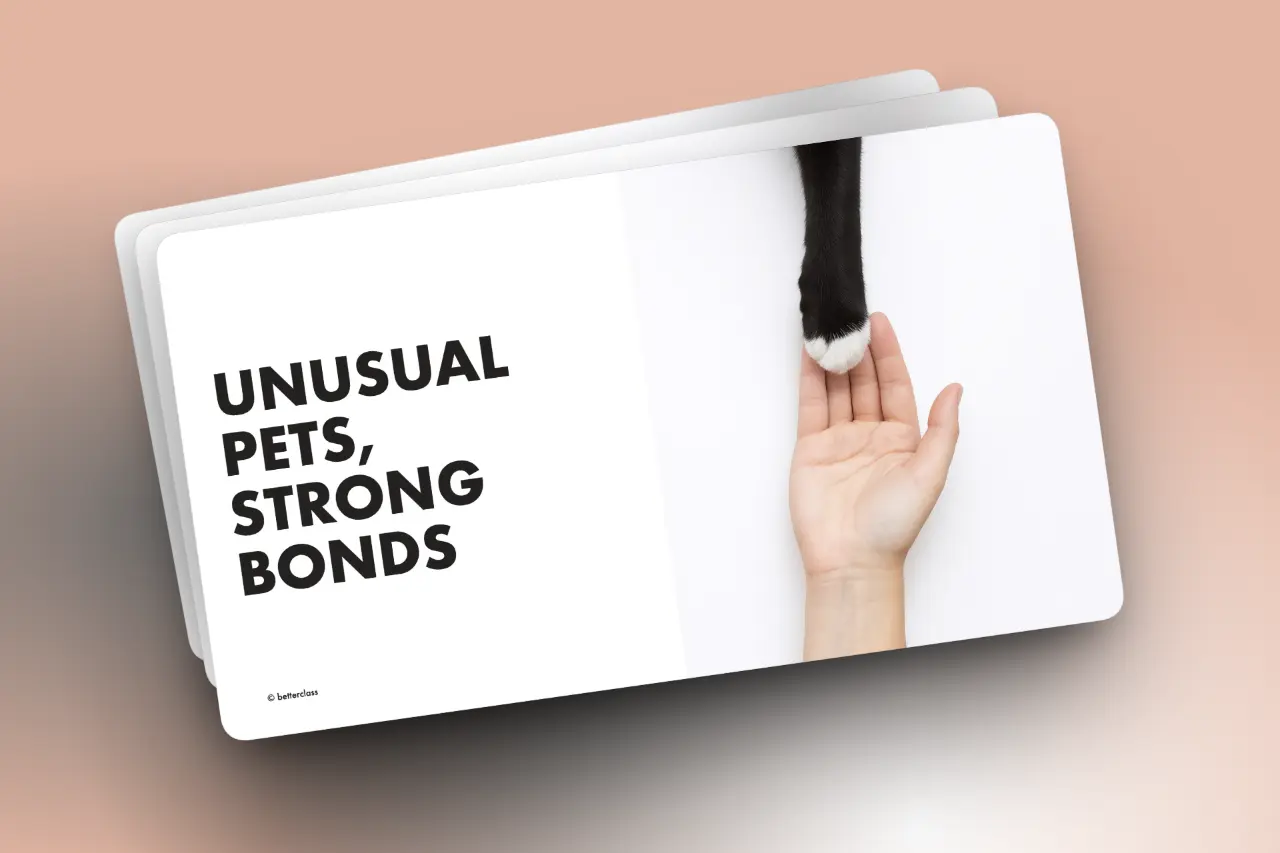
“Unusual Pets, Strong Bonds” – video-based ESL lesson plan for B1 students
B1 Level – Intermediate
1. What are the legal rules for owning a pet in your apartment or house?
2. How does the cost of a pet (food, vet bills) compare to other monthly expenses?
3. Should all children be allowed to have a pet?
4. What is the difference between buying a pet from a shop and adopting one?
5. Do you believe that pets have feelings like sadness or jealousy?
6. What are the challenges of traveling long distances with a pet?
7. How does having a pet change the daily routine of a family?
8. What is the idea of “no-kill” animal shelters?
9. Is it fair or unfair to keep wild animals as pets?
10. How does the popularity of certain movies change which pets people want?
11. What are the steps for properly training a new puppy?
12. What is the value of animals in therapeutic roles (therapy dogs, horses)?
13. Should the government give money to help people pay for pet vet bills?
14. What are the reasons why some people prefer unusual pets (snakes, spiders)?
15. How does the relationship with a pet change over many years?
B2 Level – Upper-Intermediate
1. What are the social arguments for and against allowing pets in public parks and beaches?
2. What are the moral problems when pets are left alone for long hours every day?
3. How does the pet industry and food production affect global environmental resources?
4. Should people who breed animals for sale have to pass a government inspection?
5. Analyze the psychological effect of a pet on a person who suffers from high stress.
6. Who should pay for the damage a pet causes to a neighbor’s property?
7. What is your view on the practice of giving animals clothes and painting their nails?
8. Evaluate the role of animal shelters in controlling the population of stray animals.
9. How does the scientific study of animal behavior help us understand human emotions?
10. Discuss the concept of “pet loss grief” and how it is managed in society.
11. What are the problems with having laws that are very different for cats and dogs?
12. What are the legal differences between inheriting money from a relative and leaving money to a pet?
13. Do you agree that the purpose of a pet is mostly to serve the emotional needs of the owner?
14. What steps should be taken to prevent the illegal trade of exotic pets?
15. How does the process of deciding to put a sick animal to sleep affect the owner?
C1 Level – Advanced
1. Is it fair that pets are legally considered property, similar to a car or a piece of furniture?
2. What is the right way to think about a person’s moral duty to their pet versus their duty to other humans?
3. How do the rules of large apartment complexes influence the types of pets that are commonly owned?
4. When should governments take a pet away from an owner who is not giving proper care?
5. What are the moral questions when scientists use animals for testing or research?
6. How does the expense of pet ownership affect whether poor people can get the mental health benefits of a companion animal?
7. Discuss the impact of social media trends on the popularity and breeding of animals with harmful genetic traits.
8. How should leaders use the number of stray animals in a city to judge the overall health of the community?
9. What is the idea of “animal sentience” and how should laws change to reflect it?
10. What are the long-term effects on society when humans become more emotionally connected to animals than to each other?
11. What are the difficulties when courts try to decide who gets to keep a pet after a couple separates?
12. How does the search for a perfect, purebred animal conflict with the need to adopt healthy mixed-breed animals?
13. Do you agree that the most important thing is a pet’s quality of life, not its length of life?
14. What are the simple moral rules a person should follow before deciding to get a pet?
15. Should the government enforce special licenses or tests for people who want to own a pet for the first time?
C2 Level – Proficiency
1. What is the real difference between a human family member and an animal that is treated like a family member?
2. Debate the idea: Should we completely ban the consumption of meat for human health, given the close relationship with pets?
3. How does the invention of advanced life support technology change the decision to put a sick animal to sleep?
4. What laws or rules are needed to control how much pet owners can spend on unnecessary luxury items for animals?
5. How do historical views of animals (as tools or servants) still affect how modern laws treat pets?
6. How can communities maintain a large population of pets without causing too much damage to the environment?
7. Argue the point that animals should have the right to basic welfare and happiness, independent of their owners.
8. What protection should laws give to service animals that are hurt while working in public?
9. How can we stop the problem of animal cruelty when it is often hidden inside private homes?
10. What did old thinkers say about the soul and intelligence of animals that is still important today?
11. What will happen to the need for human care if robots and AI can perfectly provide all of a pet’s needs?
12. How do people use the idea of “responsible pet ownership” to avoid discussing the cost and effort of care?
13. How does the experience of caring for an animal prepare a person for caring for human family members?
14. What is the power of animal welfare groups to change laws and influence government policies?
15. If a pet could talk and fully understand human language, how would that fundamentally change the ethics of pet ownership?