A1 Level – Elementary
1. Do you like taking photos?
2. What is a camera?
3. Do you use your phone for photos?
4. What color is your phone?
5. Do you take pictures of food?
6. What is a happy memory?
7. Do you print your photos?
8. What is a black and white photo?
9. Do you like looking at old photos?
10. What is a selfie?
11. Do you share photos online?
12. What is a beautiful view?
13. Do you use a flash?
14. What are three things you take pictures of?
15. Do you take photos of people?
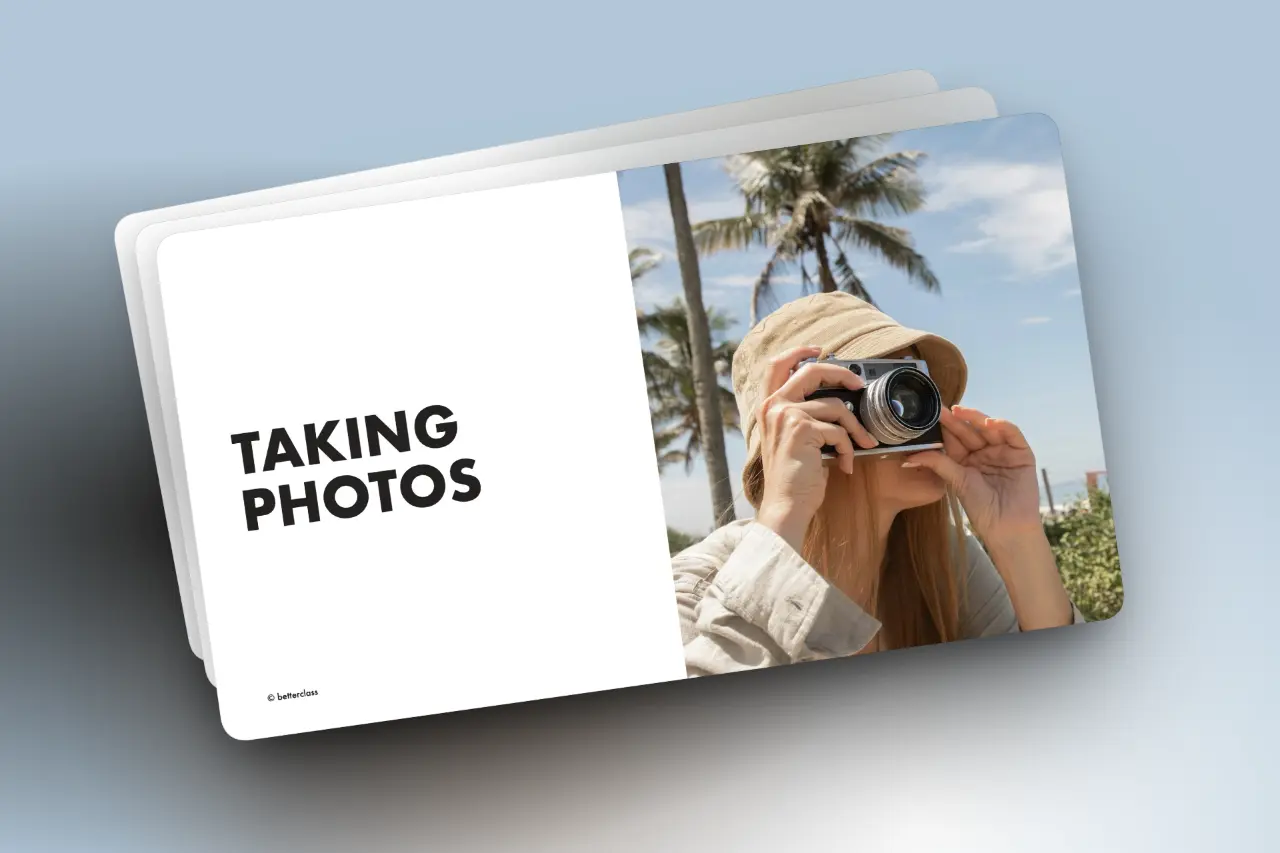
Explore a ready-to-use “Taking Photos” lesson perfect for A2 classes.
A2 Level – Pre-Intermediate
1. What is the difference between taking a photo and making a picture?
2. Why do people take photos of their holidays?
3. What are the good things and bad things about editing photos?
4. How can a photographer tell a story with one picture?
5. Should people always ask for permission before taking a photo of someone?
6. Why is it sometimes better to use a real camera than a phone camera?
7. Do you think too many photos are taken today?
8. What is a professional photographer?
9. How does light change the look of a photograph?
10. What is the difference between a landscape and a portrait photo?
11. Do you think people spend too much time looking perfect for a photo?
12. What are the problems with keeping thousands of digital photos?
13. When is the best time of day to take photos outside?
14. What are two famous photographs you know?
15. How does photography help scientists study nature?
B1 Level – Intermediate
1. What are the unspoken rules for taking photos in public places (like museums or restaurants)?
2. How does the camera on a smartphone change what people consider good photography?
3. Should all famous historical photos be available for free online?
4. What is the difference between photography as art and photography as reporting (journalism)?
5. Do you believe that taking too many photos stops you from enjoying the moment?
6. What are the challenges of taking a photo that truly shows a strong emotion?
7. How does the desire for likes on social media affect what people choose to photograph?
8. What is the idea of “photo manipulation”?
9. Is it right or wrong for a news photo to be heavily edited?
10. How does the popularity of video content affect the value of still photography?
11. What are the steps for making a photo look old or vintage?
12. What is the value of taking a photograph of a very simple, everyday object?
13. Should professional photographers be paid more for their work?
14. What are the reasons why some people never look good in photos?
15. How does photography help in solving crimes?
B2 Level – Upper-Intermediate
1. What are the social pressures to take photos that show a perfect or exciting life on social media?
2. What are the moral problems when photographers take pictures of people during a tragedy or crisis?
3. How does the widespread use of filters and face-changing apps affect people’s self-image?
4. Should museums and galleries display photos that were taken secretly or without permission?
5. Analyze the psychological effect of constantly seeing other people’s edited “perfect” lives online.
6. Who should own the rights to a photo taken by a smartphone company’s software?
7. What is your view on the practice of using photos of poor people to raise money for charity?
8. Evaluate the role of photojournalism in influencing political decisions around the world.
9. How does the ease of digital photography compare to the effort and skill needed for film photography?
10. Discuss the concept of “cultural memory” and how photographs shape what we collectively remember.
11. What are the problems with deepfake technology creating highly realistic fake photos?
12. What are the legal differences between taking a photo of a building and taking a photo of a person?
13. Do you agree that the purpose of photography is not to record reality, but to create a new one?
14. What steps should a photographer take to make sure their work is not used without their permission?
15. How does the speed of a camera (taking many photos) change the way a photographer sees the world?
C1 Level – Advanced
1. Is it fair that famous historical photos can be copied and used freely, but modern photos are strongly protected?
2. What is the right way to think about a photographer’s responsibility to protect the privacy of the person they are photographing?
3. How do the rules of social media platforms influence the kind of photography that becomes popular globally?
4. When should governments limit the use of high-tech cameras in public places for security reasons?
5. What are the moral questions when we use AI to create art or photos that look exactly like the work of real photographers?
6. How does the cheapness of digital photos affect the artistic value and respect given to photography?
7. Discuss the impact of major world events on the way war photography is shown and received.
8. How should leaders use photography to show the real effects of poverty or climate change?
9. What is the idea of “visual literacy” and why is it important in a world full of images?
10. What are the long-term effects on society when we replace real experience with taking pictures of that experience?
11. What are the difficulties when courts try to protect the copyright of a photo that was taken by a computer program?
12. How does the search for a perfect picture conflict with the need to simply enjoy the moment?
13. Do you agree that the best photos are the ones that challenge our ideas about beauty or truth?
14. What are the simple moral rules a person should follow before taking a photo that might cause shame or sadness?
15. Should the use of cameras in public spaces be controlled by a special, elected public board?
C2 Level – Proficiency
1. What is the real difference between a person’s physical memory and a photo that acts as a digital memory?
2. Debate the idea: Should we completely ban all face-changing filters because they are bad for mental health?
3. How does the invention of photography fundamentally change the way humans view time and history?
4. What laws or rules are needed to control how companies use the large number of photos people post online?
5. How do historical views of art and painting affect the value given to photography in the modern world?
6. How can communities maintain their identity when outsiders only see them through popular, simplified photos?
7. Argue the point that there is no such thing as an “objective” photograph; every picture shows a point of view.
8. What protection should laws give to a person’s public image and their right to control its use?
9. How can we stop the problem of using photos of famous places just to show off on social media?
10. What did old thinkers say about art and light that is still important for photography today?
11. What will happen to the need for human photographers if AI can create any image perfectly from simple words?
12. How do people use the idea of “sharing my life” to excuse behaviors that invade the privacy of others?
13. How does the constant need to take pictures stop us from deeply seeing and experiencing the world?
14. What is the power of a single photograph to change the laws or political feelings of a whole nation?
15. If a photo can be instantly shared with the whole world, how does that change the meaning of being a witness to an event?