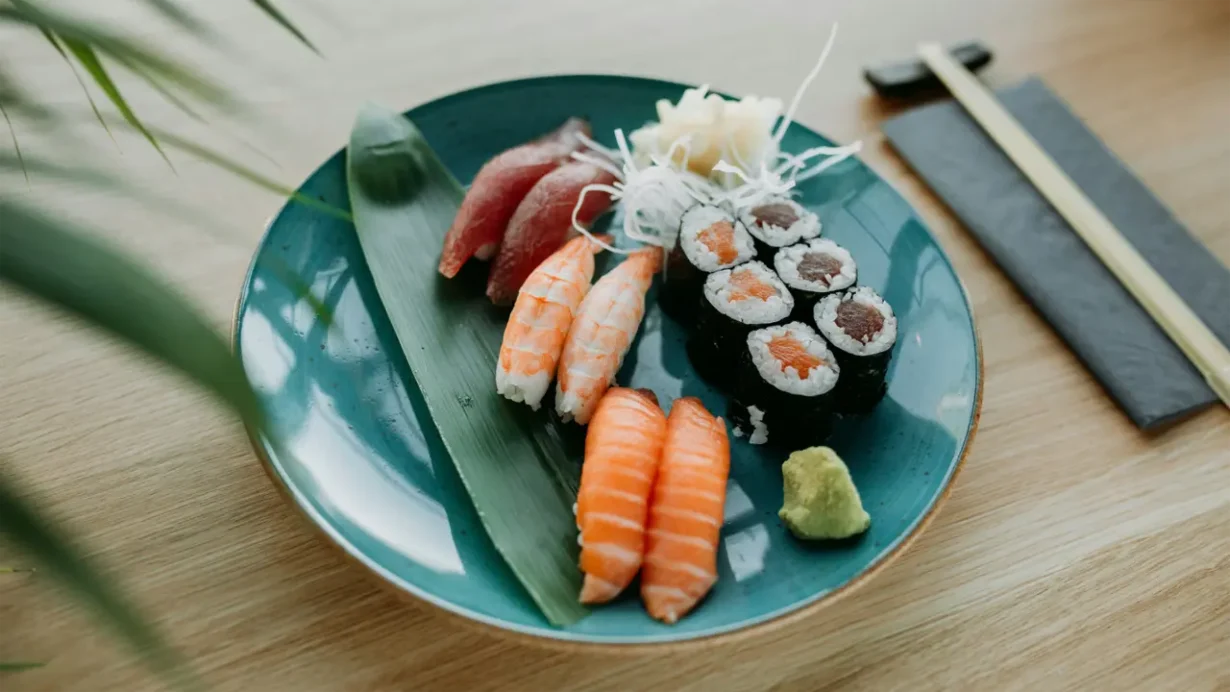
A1 Level – Elementary
1. Do you like sushi?
2. What is a small rice ball?
3. Do you like raw fish?
4. What is a green leaf (seaweed)?
5. Do you use chopsticks?
6. What is a quiet restaurant?
7. Do you like Japanese food?
8. What is a piece of ginger?
9. Do you think sushi is healthy?
10. What is a famous fish?
11. Do you use a lot of soy sauce?
12. What is a little kick (wasabi)?
13. Do you worry about food safety?
14. What are three types of sushi?
15. Do you think sushi is beautiful?
A2 Level – Pre-Intermediate
1. What is the difference between nigiri and maki sushi?
2. Why did sushi start as a way to preserve fish?
3. What are the good things and bad things about eating raw food?
4. How can a person learn to use chopsticks well?
5. Should all sushi chefs have special training?
6. Why is proper hygiene important when preparing sushi?
7. Do you think sushi is now a global food?
8. What is the purpose of the ginger slice?
9. How does eating sushi with your hands change the experience?
10. What is the difference between fresh and frozen fish?
11. Do you think sushi is more expensive than other food?
12. What are the problems when fish populations are overfished?
13. When is the best time to eat sushi (lunch or dinner)?
14. What are two differences between Japanese and Western sushi rolls?
15. How does the presentation of sushi affect its value?
B1 Level – Intermediate
1. What are the rules for politely tipping a sushi chef?
2. How does the cost of transportation affect the freshness of the fish?
3. Should the government require all sushi restaurants to display the origin of their fish?
4. What is the difference between eating sushi quickly and savoring each piece?
5. Do you believe that the quality of the rice is the most important part of sushi?
6. What are the challenges of making authentic sushi outside of Japan?
7. How does the focus on quick takeaway sushi affect the traditional dining experience?
8. What is the idea of “omakase”?
9. Is it fair or unfair when some fish species are threatened due to high demand for sushi?
10. How does a lack of knowledge about sushi etiquette lead to misunderstandings?
11. What are the steps for properly making a basic California roll?
12. What is the value of visiting a very traditional sushi restaurant?
13. Should public media highlight the environmental issues related to sushi?
14. What are the reasons why some people believe sushi is not a filling meal?
15. How does the ritual of the sushi chef reflect Japanese values?
B2 Level – Upper-Intermediate
1. What are the social pressures to appear knowledgeable about sushi etiquette?
2. What are the moral problems when restaurants serve fish that is known to be contaminated?
3. How does constant social media showing of elaborate sushi platters affect expectations?
4. Should sushi restaurants be legally required to provide information on the sustainability of their fish?
5. Analyze the psychological effect of eating a food that requires a high level of technical skill to prepare.
6. Who is responsible for promoting sustainable fishing practices for popular sushi fish?
7. What is your view on the practice of creating highly non-traditional sushi (e.g., sweet sushi)?
8. Evaluate the role of private companies in running massive global sushi chains.
9. How does the concept of “umami” (savory taste) relate to the experience of eating sushi?
10. Discuss the concept of “cultural fusion” in the context of international sushi trends.
11. What are the problems with having very different standards for food safety in different parts of the world?
12. What are the legal differences between general food poisoning and a severe allergic reaction?
13. Do you agree that the purpose of sushi is mainly to showcase the freshness of the ingredients?
14. What steps should be taken to ensure that all fish used in sushi is free of heavy metals?
15. How does the global demand for sushi affect the local price of fish in Japan?
C1 Level – Advanced
1. Is it fair that the cost of truly high-quality sushi is prohibitive for most people?
2. What is the right way to think about a sushi chef’s moral duty to refuse to serve threatened fish species?
3. How do the platform’s algorithms influence the type of rare or exotic sushi that becomes popular?
4. When should the government consider mandatory limits on the consumption of heavily exploited fish?
5. What are the moral questions when we talk about using farmed fish that is genetically modified?
6. How does the focus on quick service affect the long-term, necessary investment in training expert chefs?
7. Discuss the impact of major ocean pollution events on the future of raw fish consumption.
8. How should leaders use the popularity of sushi to promote global ocean conservation?
9. What is the idea of “slow food” and how does the traditional sushi experience relate to it?
10. What are the long-term effects on society when the difference between authentic and cheap sushi disappears?
11. What are the difficulties when courts try to decide if a restaurant is fraudulently misrepresenting its fish source?
12. How does the search for total convenience conflict with the ethical need for sustainable sourcing?
13. Do you agree that the most important thing is the preservation of traditional Japanese culinary techniques?
14. What are the simple moral rules a person should follow when they are critical of a chef’s omakase selection?
15. Should the government set a legal minimum for the amount of training required for a certified sushi chef?
C2 Level – Proficiency
1. What is the real difference between a person’s enjoyment of the taste and their appreciation for the chef’s mastery?
2. Debate the idea: Should we completely ban the consumption of highly vulnerable apex predators for sushi?
3. How does the concept of “freshness” change when fish is instantly transported across the world?
4. What laws or rules are needed to control how technology platforms use images of rare fish to increase demand?
5. How do historical views of scarcity and luxury affect modern prices for high-end tuna?
6. How can communities maintain their traditional fishing methods when corporate fleets dominate the ocean?
7. Argue the point that humans should stop all attempts to control fishing and allow the market to decide the price of fish.
8. What protection should laws give to chefs who refuse to serve unsustainably sourced fish?
9. How can we stop the problem of using the argument of “culture” to excuse unsustainable fishing practices?
10. What did old thinkers say about food, ritual, and the moral relationship with nature that is still important today?
11. What will happen to the need for human chefs if AI can perfectly create meatless sushi that tastes exactly like fish?
12. How do people use the idea of “it’s a luxury” to avoid discussing the ethical footprint of their meal?
13. How does the experience of preparing a difficult sushi roll improve a person’s patience and precision?
14. What is the power of a collective movement to demand that all sushi is sustainably sourced?
15. If scientists could create a perfect, healthy, sustainable alternative to all seafood, how would that fundamentally change the sushi industry?